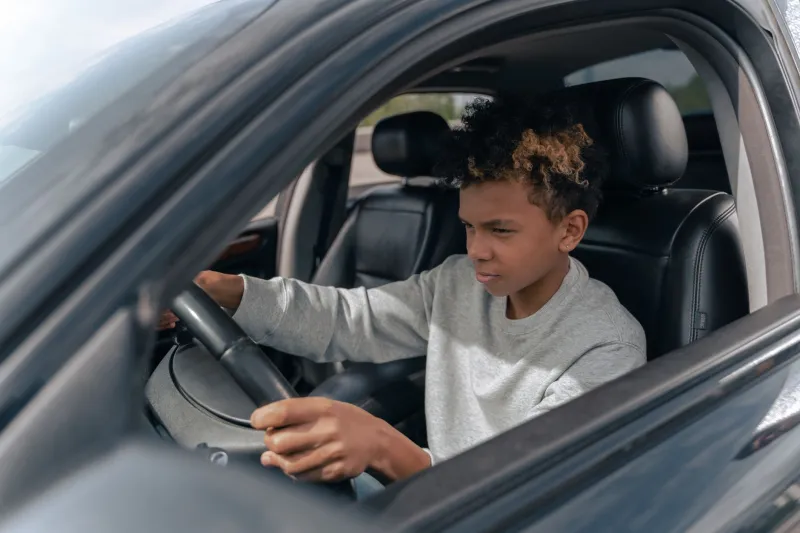
Lessons in the Dark: Getting Comfortable Driving After 4pm Around Gosport This Winter
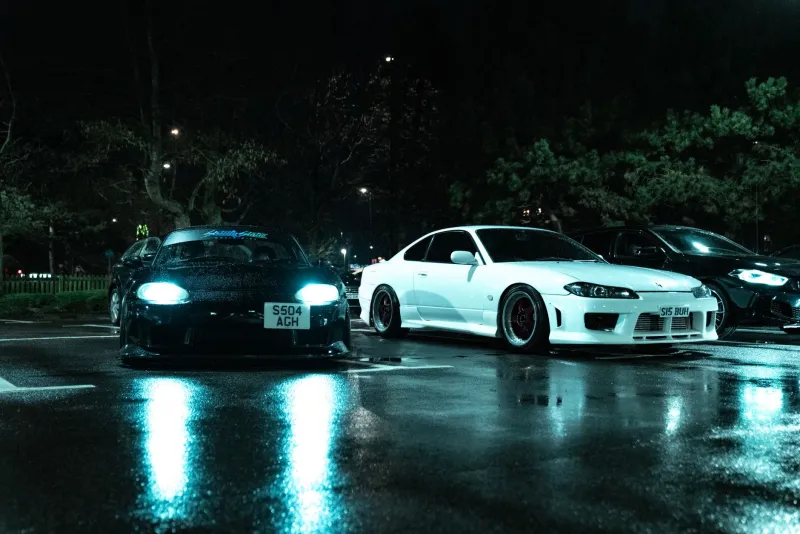
There's a moment every winter when a learner realises their 4pm lesson is now a night lesson. The first time it happens, it can feel like someone has turned the difficulty setting up without warning. Landmarks disappear, headlights come at you in pairs, and the road you've driven twenty times suddenly looks unfamiliar.
That reaction is completely normal, and it's fixable. Night driving isn't a separate skill you either have or don't — it's the same skill with less information coming in. This guide is about closing that gap calmly, one piece at a time.
What actually changes after dark
Four things, mainly. You see less far ahead, so you have less time to react. Contrast is harsher, so bright things dazzle and dark things vanish. Judging distance and speed gets harder, particularly at roundabouts. And there are people about who are harder to spot — school-age pedestrians in dark coats, cyclists without lights, dog walkers on unlit footpaths.
None of that means you shouldn't be out there. It means you drive a little slower, look a little further, and give yourself permission to be a beginner again for a few weeks.
Before you turn the key: a five-point setup
Run through this every time until it becomes automatic:
- Lights on properly. Not just sidelights. Dipped headlights from around dusk onwards, and earlier if it's raining or misty.
- Know your switches by touch. Full beam, fog lights, rear fog — you should be able to find them without looking down. Ask your instructor to walk you through them in a stationary car.
- Clean glass. A grimy windscreen turns every oncoming headlight into a starburst. Give the inside a wipe; it's the forgotten side.
- Check your mirrors are set for night. Tilt the interior mirror slightly if it has a manual dip, and know where the dimming function is.
- Screen brightness down. A bright dashboard reflects in the windscreen at night. Turn it down before you set off, not while moving.
Glare: the one that catches everyone
Oncoming headlights are the single biggest complaint from learners driving in the dark, and the answer is almost always the same: don't look at them. Look at the left edge of your lane, or the kerb line, and let the car pass in your peripheral vision. If someone behind is dazzling you through the mirror, use the dip function or adjust the mirror angle — don't speed up to get away from them.
If an oncoming driver hasn't dipped their beams, a quick flash of your own main beam is a reasonable reminder. Once. Not a duel.
Unlit roads and the seafront run
The lanes out towards Alverstoke and the roads along the coast can go properly dark between streetlights. That's where full beam earns its keep — but only when it's genuinely clear ahead and there's nobody in front of you. Dip it the moment you see tail lights, headlights, or the glow of a cyclist's reflective jacket.
A useful habit for unlit stretches: drive to the limit of what you can stop within, not the limit on the sign. If you can only see forty metres, forty metres is your speed, regardless of what the road allows.
People are harder to see than cars
Pedestrians in dark clothing, cyclists with a single flickering rear light, someone stepping out between parked cars near a pub — these are the scenarios that catch experienced drivers out, let alone learners. Two habits help enormously:
- Scan the pavements, not just the road. Look for movement near crossings, bus stops and shop fronts.
- Expect the unexpected at junctions after dark. A person walking home may not look before crossing a side road.
Give cyclists and pedestrians a wider berth than you would in daylight. It costs you nothing and buys you a lot of margin.
Roundabouts and junctions in the dark
This is where the extra judgement really shows up. Without daylight you can't read the body language of a car — you can't see the driver's head turn or the slight nose-dip of braking. You're working from lights and speed alone.
So give yourself more time. Approach more slowly than you would in daylight, use the road markings and the shape of the kerb to identify lanes, and be more willing to wait for a clearly safe gap rather than a probably-fine one. At traffic lights, watch the far-side lights if you can see them — they often give you a second of warning that the sequence is about to change.
And one small thing: your own lights make you visible, but they also make you visible as a learner with a roof box sign. That's not a problem. Most drivers are kinder than learners expect.
Asking for the practice you actually need
You don't have to announce 'I'm terrified of the dark' — although honestly, most instructors have heard it many times and won't blink. A simpler approach works better:
'Could we do a lesson that finishes after dark? I'd like to practise unlit roads and roundabouts at night.'
That gives your instructor something concrete to plan around. A good night lesson usually includes a lit town-centre stretch, an unlit road, at least one busy roundabout, and a bit of dual carriageway if there's one nearby. Ask to stop and talk through anything confusing rather than pressing on and hoping it clicks.
If a whole lesson in the dark feels like a lot, ask to split it — start in daylight and let the light fade while you're driving. Watching the change happen is often far less jarring than setting off into blackness.
A short checklist for the passenger seat
Stick this on your phone and glance at it before you set off:
- Lights on, and I know where the main beam switch is
- Windscreen and mirrors clean
- Dashboard dimmed
- Speed down by about ten percent from my daylight pace
- Looking at the kerb line when headlights approach
- Wider berth for anyone on foot or two wheels
- Extra patience at roundabouts
The bit people forget
Driving in the dark is not a test of nerve. It's a test of information management — and the learners who settle into it quickest are the ones who slow down, look further ahead, and stop worrying about what the driver behind thinks. Winter lessons are darker, but they're not harder. They're just asking you to be a bit more deliberate, and that's a habit worth keeping all year.