Seven Days, No Audience: Easing Into Solo Driving Around Gosport
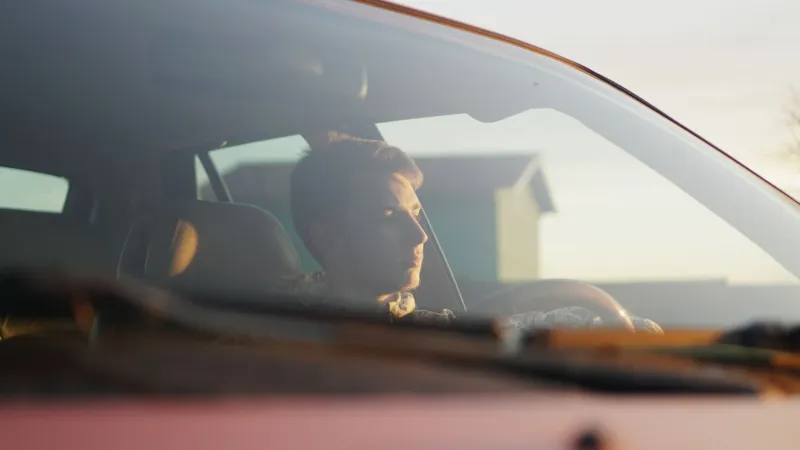
Passing your test is a brilliant feeling. For about twenty minutes, you are unstoppable. Then the examiner hands you the certificate, you ring everyone you know, and eventually you walk back to a car that no longer has a dual control pedal or a calm voice beside you. That is when the quiet arrives.
If you feel a bit wobbly about heading out alone around Gosport, you are not being dramatic. You have just spent months learning with someone who could quietly intervene. Driving solo is a different skill: it is the skill of trusting your own judgement. The good news is that it does not need to be tackled all at once. A short, structured first week can make the whole thing feel far more manageable.
Day one: the familiar loop, at a quiet time
Do not make your first solo drive a big event. Pick a route you know almost too well — maybe a loop around the quieter residential streets near Alverstoke, or a simple circuit through Brockhurst that avoids the busiest times. Go out mid-morning or early afternoon if you can, when the school run has cleared and the roads are not yet filling up.
The aim is not to prove anything. It is simply to hear the car without commentary, check your mirrors without prompting, and arrive home thinking, right, that was fine. Keep it to fifteen or twenty minutes. If you feel your shoulders creeping up towards your ears, pull over somewhere legal and safe, take a breath, and reset. That is not a failure. That is good driving.
Checkpoint: before you go back inside, name one thing you handled well. Not a criticism. One actual thing. You judged a gap nicely, or you spotted a pedestrian early, or you parked without needing three attempts.
Day two: a small errand with a proper purpose
A drive with a job to do can feel easier than a drive for the sake of driving. Choose a simple supermarket trip — the kind where you know the car park layout and the entrance is not a maze. Go at a quieter hour, take a list, and treat the whole thing as one continuous routine: approach, indicate, park, breathe, shop, reverse out carefully, come home.
Gosport’s smaller roads can be deceptive. A street that looks wide can narrow quickly near parked cars, and a junction that seems clear can have someone waiting just out of sight. Use the habits you built in lessons: mirror, signal, manoeuvre; look for the gap rather than the obstacle; keep your speed steady and low where visibility is tight. You are not being overly cautious. You are being sensible.
Checkpoint: notice how it feels to park without an audience. If you are not happy with the first bay, simply drive round and choose another. New drivers are allowed to do that. In fact, it is often the most confident thing you can do.
Day three: one busier junction, handled calmly
By the middle of the week, add one slightly more demanding element. Not the A32 at rush hour, and not a complicated roundabout you have always avoided. Just one junction that makes you think. Perhaps it is the approach to Stoke Road, or a busy mini-roundabout near Privett, or joining traffic from a side road where you have to wait for a proper gap.
The trick is to rehearse the routine before you get there. As you approach, ask yourself: what can I see, what can I not see, and what is my plan if the gap does not come? If you have to wait, wait. A learner’s instinct is sometimes to go because someone is behind you. A new driver’s skill is to go only when it is genuinely safe.
Checkpoint: did you feel rushed? If so, that is useful information. Next time, choose a slightly quieter time or approach from a different direction. There is no prize for tackling the hardest junction first.
Day four: a short run towards the coast
A gentle drive towards Stokes Bay or out towards Lee-on-the-Solent can be a lovely confidence builder, especially now that the darker afternoons are settling in. The point is not speed or distance. It is the feeling of taking the car somewhere slightly beyond your immediate neighbourhood and bringing it home again.
Keep the drive short. Park somewhere straightforward. Watch for cyclists, dog walkers, and cars pulling out of side roads near the seafront. Coastal roads can look relaxed but still need full attention, particularly as light begins to fade. If you have not driven much in dusk conditions, use this as a tiny introduction rather than a full night drive. Headlights on, dashboard lights checked, and home before it gets properly dark.
Checkpoint: give yourself credit for the ordinary. A smooth, uneventful drive is exactly what you are aiming for.
Day five: the repeat drive
Repeat one of the earlier routes. This might sound boring, but repetition is quietly powerful. The second time you drive a road, you notice more. The third time, it starts to feel like yours. Familiarity reduces the mental load, and that leaves more room for observation.
You might also use this day to check a few practical things: tyre pressures when the car is cold, washer fluid, fuel level, and where your breakdown cover details are kept. New-driver confidence is not just about junctions. Knowing the car is ready is part of feeling settled.
The weekend: rest, review, and no pressure
Do not fill every day with a solo drive. Give yourself a day off. Then, when you are relaxed, think back over the week. What felt easier than expected? What still feels scratchy? Make a note of one thing you want to practise next week — maybe parallel parking, maybe a particular roundabout, maybe simply driving in the rain.
If you are using P plates, use them for as long as they help you feel comfortable. If you are not, that is fine too. The goal is not to look experienced. The goal is to become experienced, gradually and safely.
A final word for Gosport new drivers
The first week after passing is not a test of whether you are a proper driver. It is simply the start of a longer learning curve, and everyone’s curve looks different. Some people are off to Fareham on day one. Others need a few quiet loops around their own postcode. Both are fine.
Keep your drives short, your expectations kind, and your checkpoints simple. You have already proved you can drive to the standard. Now you are just getting used to doing it without someone beside you. That takes a little time — and that is completely normal.