The Art of the Pull-In: Choosing a Safe Stopping Spot Around Gosport
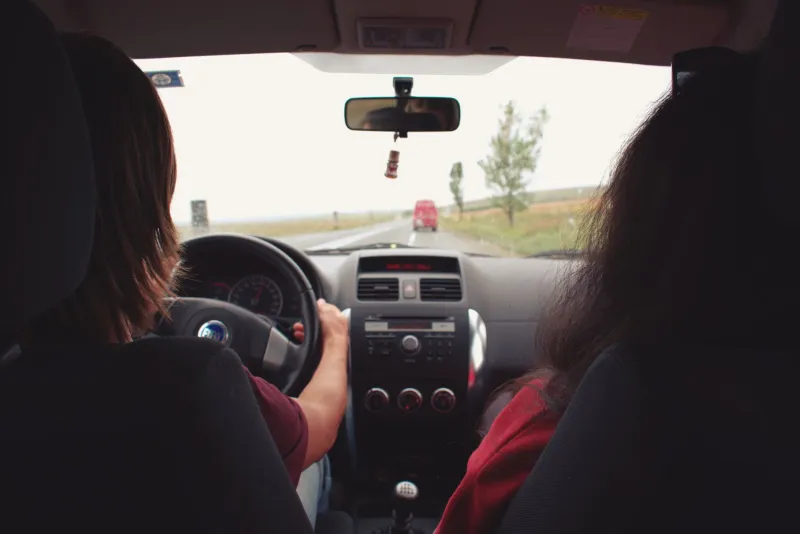
There is a particular kind of silence in a driving lesson after the words: pull over when it is safe to do so. Your instructor or examiner is not asking you to find a parking bay, perform a magic trick, or read their mind. They are asking you to make a controlled, legal and visible stop. That is all. Yet on a busy stretch of Stoke Road or a narrow residential street near Alverstoke, the pressure can make the next ten metres feel like a puzzle with no correct answer.
The good news is that pulling over is a routine, not a talent. Once you have a simple filter for choosing a spot, the decision becomes much calmer. You stop scanning for perfection and start looking for what actually matters: safety, legality and consideration for other people.
Start With the Three-Question Filter
Before you touch the brake, run three quick questions in your head.
First, is it legal? That means no double yellow lines, no bus stop clearway, no crossing zigzags, no dropped kerb blocking someone's driveway, and no parking restrictions you have spotted on a sign. Second, is it visible? A spot just after a bend, on the brow of a hill, or partly hidden by parked vans is not a gift to other road users. Third, is it considerate? Even if a stop is technically allowed, blocking a narrow pavement, a cycle lane, or a resident's access can create a problem you do not need.
If the answer to any of those is no, the spot is not the one. Keep driving. That is a valid decision, not a failure.
Read the Kerb Before You Read the Road Ahead
Gosport has plenty of streets where the kerb tells a story. Double yellow lines mean no waiting at any time, so do not stop there just because the road looks quiet. Single yellow lines can have restrictions that vary by sign, so treat them with caution unless you know the rule. Bus stop clearways are marked with thick yellow lines and are best left alone. Zigzags near pedestrian crossings are an absolute no.
Then look for the quieter clues. Dropped kerbs often mean driveways or pedestrian access. A gap outside a house may look inviting, but if someone needs to get out for work or school, it is not really a gap. White lines and hatch markings can also tell you where the road is trying to keep clear. You do not need to memorise every marking in the Highway Code before your next lesson, but you do need to notice them before you commit.
The Gosport Spots That Catch Learners Out
The busy shopping stretch around Gosport High Street is a classic. There are crossings, loading areas, buses and people who step out without checking. The temptation is to stop in the first space you see, but that space may be a clearway or a delivery bay in disguise. Better to continue to a side street or a quieter section where the stop is obvious and clean.
Brockhurst Road and Fareham Road can also catch learners because the traffic keeps moving while you are trying to make a decision. Do not let the pressure of a queue behind you rush you into stopping somewhere silly. A few extra seconds to find a proper spot is always better than an abrupt stop on a narrow section.
Residential streets around Alverstoke and Anglesey can feel easier, but they bring their own tests: parked cars on both sides, bins out, driveways, and limited sight lines. A quiet-looking gap may be directly opposite a parked car, making the road too tight for others. If you would not want someone to stop there when you were trying to get past, that is usually a sign to keep going.
A Routine You Can Say Out Loud
When you hear the instruction, talk yourself through it. It sounds simple, but it keeps your brain busy in a useful way.
- Look well ahead and pick a candidate spot, plus an escape route if it turns out to be unsuitable.
- Check your mirrors, signal if needed, and reduce speed gently.
- Position close to the kerb without mounting it, keeping your steering smooth.
- Stop, secure the car, cancel the signal, and prepare for the next instruction.
If the road is busy or the spot is not right, say so calmly: I am going to continue to the next safe place. Examiners and instructors are not looking for a dramatic stop. They are looking for good judgement. Driving on when a stop would be unsafe is good judgement.
When the Perfect Spot Does Not Exist
This is the part that worries learners most. What if there is nowhere? In reality, there is almost always somewhere, but it may be further ahead than you hoped. Do not slam on the brakes, do not swing into a driveway, and do not stop on a bend just because the instruction has been given. Keep the car moving, keep looking, and choose the next safe opportunity.
On a narrow Gosport street with cars parked both sides, the safest option might be to turn into a side road if that is safe and legal, or to continue until the road opens up. The key is to stay predictable. Other drivers can cope with a learner who keeps going and finds a sensible spot. They struggle with a learner who stops suddenly because they felt they had to obey immediately.
The Last Ten Metres Matter
Once you have chosen your spot, the final approach is where the stop becomes neat or messy. Check your left mirror and blind spot for cyclists or pedestrians. Signal in good time, slow down smoothly, and aim to finish parallel to the kerb rather than at an angle. Wheels straight, handbrake on, car secure. Then take a breath before you do anything else.
Pulling over is not about being perfect. It is about being deliberate. A safe stop on a quieter stretch is worth far more than a rushed stop in a risky place. Build that routine into your next few lessons around Gosport, and the instruction will start to feel less like a puzzle and more like an ordinary part of the drive.