Where the Town Ends: Your First Calm Stretch Toward M27 Speeds
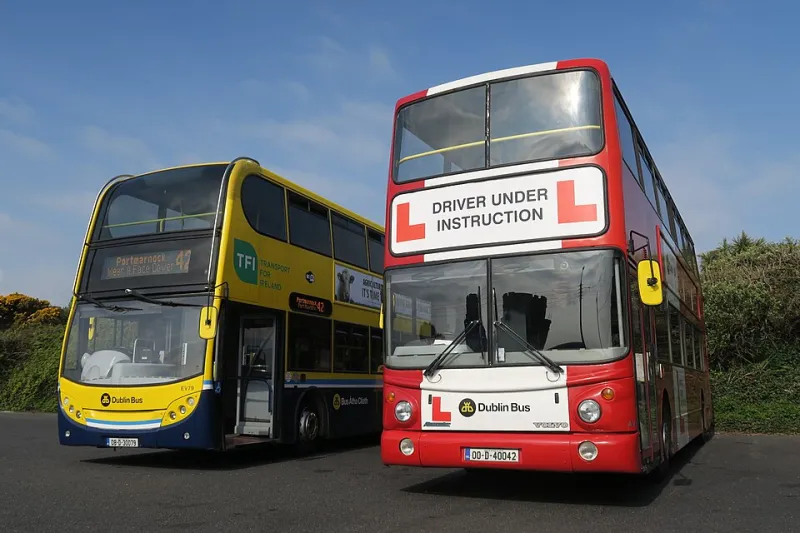
Photo: Cityswift, CC BY 2.0, via Wikimedia Commons
You can drive a tidy loop of Gosport — down past the ferry, along the seafront, up through Brockhurst, back round the one-way system — and still feel a small lurch in your stomach at the thought of the M27. That's normal. It isn't a lack of skill. It's just that everything you've practised so far happens at 20, 30, maybe 40mph, with plenty of time to think. Faster roads ask a different question of you, and the answer isn't bravado. It's observation.
So let's take the mystery out of it, piece by piece.
The legal bit that's actually on your side
If you hold a provisional licence and you're wondering whether you're even allowed near a motorway — you are, but only in a very specific setup. You must be with an approved driving instructor, in a car fitted with dual controls. No parent, no mate, no borrowed hatchback. That rule exists for a reason, and from a learner's point of view it's genuinely reassuring: the person beside you can take over, and they've done this hundreds of times.
Most instructors won't take you near a motorway until your basic control is settled and your mirror habits are automatic. If you're still finding junctions fiddly, that's not a red light — it's just sequencing. Faster roads amplify whatever's already there, so it's kinder to yourself to sort the fundamentals first.
Leaving town: the warm-up matters
The run out of Gosport does half the work for you. Heading up the A32 toward Fareham gives you a gentle ladder of speeds: 30, then 40, then the national limit on the wider stretches. Use that. Notice how much further ahead your eyes travel as the speed climbs. Notice how the gap you'd leave in town starts to feel small.
By the time you reach the motorway roundabout, you should already be thinking in longer distances. That mental shift is the actual lesson. The motorway itself is just more of the same, at a steadier rhythm.
The slip road is a joining lane, not a launchpad
This is where most nerves live, so let's be precise about it.
A slip road exists to let you arrive at the speed of the traffic already on the carriageway. Not faster, not dramatically slower — matched. That means building speed steadily and using the whole length of the lane rather than dithering at 45mph and hoping for a gap.
Three things help:
- Look early. Scan the carriageway to your right as soon as the lane opens up, not at the last second.
- Pick your gap before you need it. If traffic is heavy, aim to slot in behind a vehicle rather than beside one.
- Adjust, don't abandon. If the gap closes, ease off and look again. There's almost always another one coming, and your instructor is watching the mirrors you can't fully read yet.
Joining at a matched speed is calm. Joining slowly and then accelerating into a space is the thing that creates panic — yours and everyone else's.
Speed: matching the room you've got
Seventy is a limit, not a target. On a busy stretch near the Fareham junctions you might be sitting comfortably at 55, and that's fine. The number that actually matters is the gap in front of you.
At motorway speeds, the two-second rule stops being a suggestion and becomes the whole game. Pick a fixed point — a bridge, a sign, a mark on the tarmac — and check that two full seconds pass between the car ahead reaching it and you reaching it. In rain, double it. In spray, double it again and then add more.
When someone pulls into your gap, don't brake sharply and don't fume. Lift off gently, rebuild the space, carry on. That small act of patience is what separates a nervous driver from an unsafe one.
Lane changes in your own time
Mirror, signal, manoeuvre still applies — it just unfolds over a longer distance. Signal early enough to be useful, not so early that it becomes meaningless. Check your blind spot properly, because at 70mph a car can sit in it for a startlingly long time.
And here's the bit learners rarely hear: you don't have to change lanes because someone behind you is impatient. If the gap isn't there, wait. A missed lane change costs you a minute. A rushed one costs a lot more.
What your instructor is actually watching
Not your top speed. They're watching whether your eyes are working far enough ahead, whether your following distance holds, whether you notice the brake lights three cars in front rather than the one immediately ahead. They're watching whether you ease off when the traffic thickens near the M275 turn-off, and whether you can read a joining slip road from the main carriageway and make room for someone else.
That last one is worth dwelling on. Being the driver who gently moves over or adjusts speed to let a learner join is the mark of someone who actually understands faster roads.
Coming off is meant to be boring
Leave plenty of distance before your exit, signal in good time, and let the speed come down gradually on the deceleration lane. The limit signs on the exit slip road are not advisory. If you arrive at the roundabout at 60mph, you've left it too late — and that's a lesson, not a disaster.
If you overshoot, don't swerve. Carry on to the next junction, turn around, come back. Instructors see this constantly and nobody dies of embarrassment.
Small things to practise before the day
Between now and your motorway lesson, try these on ordinary roads:
- Narrate what you see two cars ahead, out loud, for five minutes each lesson.
- Practise judging two-second gaps at 40mph so the habit is already built.
- On dual carriageways, get used to the feeling of a lorry alongside you — the buffeting is normal.
- Watch a few dashcam clips of slip-road joins and pause to predict what happens next.
The M27 is a wide, well-signed, reasonably forgiving road. It only feels like a monster because you haven't met it yet. Meet it properly prepared, with a calm instructor beside you and your eyes well ahead, and it turns into what it actually is: a long, straightforward stretch of tarmac that gets you where you're going.