Silent Miles, Useful Answers: Running a Mock Test Around Gosport Without the Fear

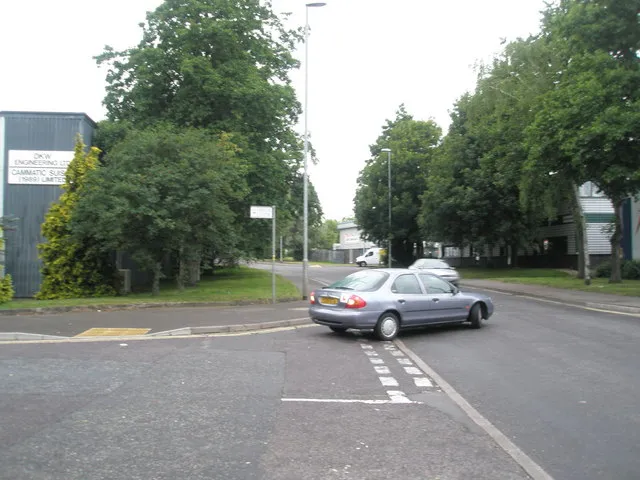
Photo: Heather Kimmel, CC BY-SA 4.0, via Wikimedia Commons
Test-day nerves rarely come from the driving itself. They come from the unknown: the unfamiliar silence, the clipboard, the feeling that every small decision is being weighed. A mock test can't remove the fact that your real test matters, but it can remove the surprise. Think of it as a dry run through the format — a chance to meet the quiet passenger and the test-style directions before they count for anything.
It's a rehearsal of the format, not a fortune teller
A mock test is not a prediction of whether you'll pass. It's a practice run under test-like conditions, usually arranged with your instructor, that follows the shape of the real thing: a show-me or tell-me question, around forty minutes of driving, independent driving for roughly twenty of those minutes, a manoeuvre, and a debrief at the end. Your instructor sits where the examiner would sit and says very little. They note what happens, but they don't coach you through it.
The point is not to collect a score. The point is to find out how you cope with the format. Some learners drive beautifully in lessons and then rush at junctions when someone stops chatting. Others tighten up when they think they're being watched. A mock test surfaces those habits in private, while there's still time to do something about them.
The quiet passenger problem
Most learners are used to a chatty instructor. That's a good thing — conversation keeps nerves down and makes lessons feel human. But the real test is quieter. The examiner is polite, professional and neutral. They won't fill a silence with reassurance, and that silence can feel like judgement if you're not used to it.
So practise the quiet. Ask your instructor to run a familiar loop — say, from Brockhurst down towards Stoke Road and out to the seafront — with no commentary at all. No 'well done', no 'watch that kerb', no small talk. Just directions and the road. At first it feels odd. After ten minutes, it starts to feel normal. That's the whole trick: familiarity with silence takes the edge off it.
How to set up a mock that means something
A mock test works best when it's structured, not improvised. Ask your instructor for a double lesson and explain that you want the format, not a normal lesson. A useful mock includes:
- A show-me or tell-me question at the start, answered while you're getting settled.
- A mix of roads: busy junctions, a roundabout or two, a stretch of 30mph, a faster road if there's one nearby, and some residential streets.
- Around twenty minutes of independent driving, using either a sat-nav or a series of signs. 'Follow signs for the ferry terminal' is a good local one.
- One manoeuvre — a bay park in a quiet car park, or a pull-up on the right and reverse back two car lengths.
- A route that isn't memorised. The real test won't follow your favourite loop, so the mock shouldn't either.
Your instructor should only intervene if something is genuinely dangerous. Otherwise, they let it play out and save the notes for the debrief. That's the deal: no mid-drive corrections, no hints. It feels strict for forty minutes, but it's the only way the rehearsal is worth anything.
The faults are the point
Here's the mindset shift that makes a mock test useful: a fault is not a verdict on you. It's data. If you miss a mirror check on a lane change, that's not proof you're a bad driver. It's proof that your mirror routine needs a bit more structure under pressure. If you approach a roundabout too fast, you've found the exact moment where your calm disappears. That's valuable.
Serious faults can feel brutal in the moment. You might think, 'well, that's it, I've failed the mock.' But there's no certificate at the end of a mock test, and no consequence beyond the lesson itself. Finding the edge of your ability in a practice run is far better than finding it on the day. Your instructor will usually let you keep driving after a serious fault, just as an examiner would, because the point is to see how you recover and carry on.
Common things that show up in mocks around Gosport include observation at junctions, mirror timing before signalling, speed on approach to roundabouts, and lane discipline when the road markings get busy. None of those are character flaws. They're habits that haven't been tested under quiet pressure yet.
The debrief: two things, not twenty
After the drive, resist the urge to ask for a full list of everything you did wrong. A long list is noise. Ask your instructor for two things: one thing you did well and should keep doing, and one thing to work on next. Maybe two things to work on, if they're closely linked. Write them down. That's your plan for the next lesson.
A good debrief also asks you how it felt. Where were you unsure? What did you do about it? What would you do differently next time? Those questions matter more than a fault count, because they teach you to notice your own driving rather than waiting for someone else to judge it.
What to do the week after
Don't book another mock immediately. Let the first one settle. Go back to normal lessons, target the two things from the debrief, and then — if you and your instructor agree — run a second mock closer to your test date. The second one is usually calmer, because the format is no longer a mystery. You've met the quiet passenger. You know how the independent drive feels. The test itself starts to look like another drive in a quiet car, rather than an exam you've never rehearsed.
You can't delete nerves entirely. But you can delete surprise. A mock test around Gosport is a sensible way to do that: not a prediction, not a pass-or-fail, just a useful set of silent miles and honest answers.