Bays, Not Bravado: Reversing Into a Space Without an Audience in Gosport
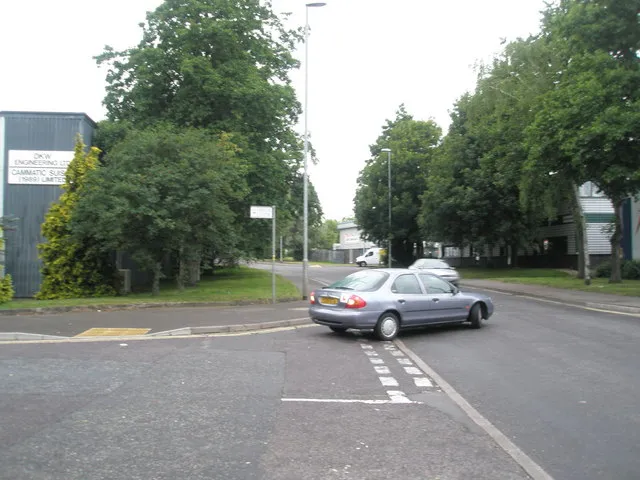
Photo: Basher Eyre, CC BY-SA 2.0, via Wikimedia Commons
There's a particular kind of quiet panic that shows up when a learner realises they've got to reverse into a bay and there are three cars waiting. Nothing about the manoeuvre is actually difficult. It's slow, it's gentle, and it happens at walking pace. But add an audience and it suddenly feels like a driving test, a job interview and a penalty shootout rolled into one.
So let's take the audience out of it first. Then we'll deal with the parking.
Start Where Nobody Is Watching
You don't learn to reverse into a bay in a busy supermarket car park on a Saturday. You learn it in a corner of a car park that's so empty it's almost rude. Around Gosport that's easier than you'd think: the seafront end at Stokes Bay on a damp weekday morning, the quieter reaches of Walpole Park, the back rows of a retail car park before the shutters go up. Anywhere with good lines painted on the ground, decent light, and nobody queuing for your space.
Go there twice before you go anywhere busy. Not because you'll be perfect after two goes, but because your brain needs a version of this manoeuvre that doesn't include an audience. Once you've done it calmly a dozen times, the busy version is just the same thing with more paint on the canvas.
Set Up Before You Move a Single Inch
The biggest cause of a messy bay park isn't steering — it's a lazy starting position. If you begin in the wrong place, every correction afterwards is an apology for that first decision.
Drive past the bay you want. Keep a sensible gap from the row of parked cars — roughly a door's width is the classic guide, though in a tight car park you'll take what you're given. Stop when you're level with the bay two along from the one you want, or when the bay you're aiming for sits just behind your shoulder. Then stop properly. Handbrake if you need it. Breathe.
This pause is not wasted time. It's the bit where you check your mirrors, glance over your left shoulder, and confirm that the space is still empty and that a trolley or a small child isn't about to appear in it. Examiners love observation, and so do bumpers.
Reference Points That Belong to Your Car
Every instructor has a set of reference points they swear by: "when the kerb line appears halfway up this mirror, put one turn on." They work beautifully — in that instructor's car, with that instructor's seat height, with that instructor sitting next to you.
In your own car, on your own, those numbers can drift. So build your own points, and build them slowly. Line up in your quiet car park, get the car straight in a bay, then sit there and look at what you can see. Where does the white line sit in the left mirror? What does the bay's edge look like through the rear window? Where's the door handle relative to the line when the car looks straight?
Then try the manoeuvre and notice when things start to look wrong. That moment — the one just before it actually goes wrong — is your real reference point. Learn to recognise it and you've learned more than any fixed measurement can teach you.
Slow Isn't Apologetic, It's the Skill
A bay park happens at about the speed of a brisk walk, and in a manual car that means clutch control rather than accelerator. Bite point, tiny adjustments, foot hovering. In an automatic, it means your foot resting on the brake and the car creeping gently backwards.
If you feel the urge to speed up because someone's waiting, that's the moment to slow down instead. Fast reversing is how you end up straddling two bays and wishing you'd stayed in bed. The learner who takes forty careful seconds looks far more competent than the one who flings it in and has to start again.
When It Goes Crooked — and It Will
Here's the thing nobody tells nervous learners: the recovery is the manoeuvre. Anyone can get lucky on a good day. The skill is knowing what to do when you're halfway into the bay, at an angle, and running out of room.
Don't try to rescue it with one heroic swing of the wheel. Stop. Look. Then use small shuffles: a short creep forwards, straighten up, and come back again with a shallower angle. Two or three shuffles is completely normal and perfectly legal. What you're aiming for is a car that sits tidily inside the lines with room to open the doors — not a single-move miracle.
If it's genuinely going nowhere, pulling out and starting fresh is not failure. It's the decision an experienced driver makes all the time.
On Being Watched
Someone will always be waiting. They'll be waiting in a Gosport car park on a Sunday, they'll be waiting on a Tuesday, they'll be waiting at 7am when there's no reason to be there at all.
Three things worth remembering. Most of them have taken three goes to park themselves this week. Almost none of them are timing you. And if the queue behind you is making your hands shake, you're allowed to wave them into the space instead. Nobody will remember in ten minutes. You'll remember feeling rushed, so don't rush.
Turn the Difficulty Up Gradually
Once the empty corner feels boring, add one parked car. Then two. Then try a car park with actual shoppers in it, on a weekday afternoon, when there's a bit of life but no pressure. Only after that do you tackle the busy Saturday bays near the town centre or the shopping run on a December weekend.
That's the whole progression: quiet, quieter, quietest, then slightly less quiet. Confidence comes from repetition in places that don't frighten you, not from throwing yourself into the deep end and hoping.
A Short Practice Menu for This Week
- Ten minutes in an empty car park, setting up and stopping — nothing else.
- Five reverses into a bay, at crawling speed, with a deliberate pause before each one.
- Two attempts that you deliberately make crooked, then recover with shuffles. Practising the recovery on purpose takes the fear out of it.
- One attempt with a friend standing safely at the far end of the row, purely so you get used to a face watching.
Come back next week and do it again. Then book a lesson and let your instructor watch you do it, because a second pair of eyes on your observation — mirrors, blind spot, that final glance — is worth more than an hour of guessing.
The goal isn't a flawless bay every time. It's a routine you can trust when the car park is full and your hands are a bit damp. Get that, and the audience stops mattering.