The Last Two Minutes: Turning a Gosport Lesson Into Something You Can Keep
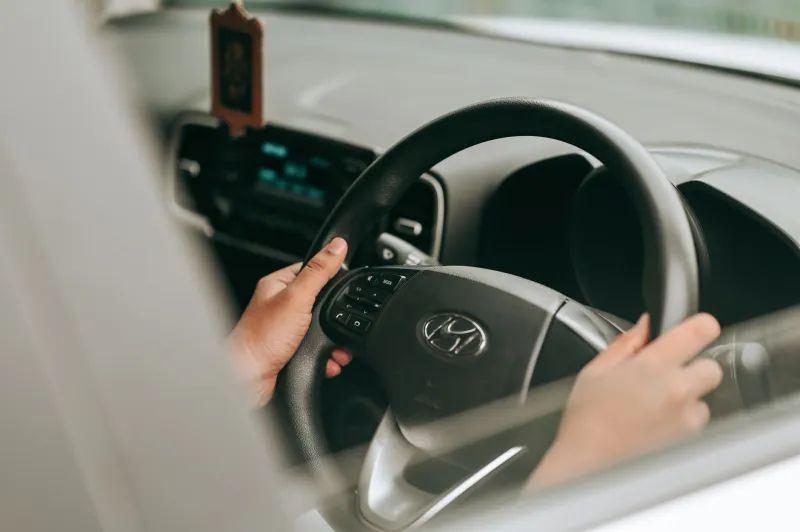
You switch off the engine outside your house in Gosport. Your instructor says something encouraging. And yet, by the time you are through the front door, the only thing you can remember is the stall at the Forton Road junction or the moment you hesitated at Brockhurst. The whole lesson has somehow been filed under one wobble.
That is not a character flaw. It is just how memory works when you are tired, concentrating hard and trying to do something new. The last two minutes in the car are a chance to catch the good stuff before it disappears.
Why the final minutes matter
A driving lesson is not a court case. You do not need to gather every piece of evidence and deliver a verdict on whether you are a natural or a disaster. You just need a fair summary.
When you debrief quickly, before unclipping your seatbelt and going back to normal life, you give your brain a simple record of what actually happened. Not a polished diary entry. Not homework. Just three lines that stop the lesson from being remembered as worse than it was.
This is especially useful around Gosport, where lessons can cover a lot of ground in a short time: quiet streets in Alverstoke, busier stretches near Stoke Road, the odd ferry queue, parked cars, school-run traffic and the sort of ordinary junctions that ask you to keep thinking. A lesson can feel messy simply because it was full. The quick debrief helps you separate a busy lesson from a bad one.
The three-line check-in
The routine is small enough to do in the driver's seat. Your instructor can ask the questions, a parent can ask them on the way home, or you can voice-note them on your phone. A notebook in the glovebox is nice, but it is not essential.
Line one: a bright spot
Not a vague 'it was fine'. One specific thing that went well. You held a steady speed along Clayhall Road. You checked your mirror before signalling. You waited calmly at a crossing instead of rushing. You pulled in neatly near the seafront without clipping the kerb.
Specific evidence is more useful than a gold star. It gives you something to repeat.
Line two: a sticky patch
Not 'I was awful'. A sticky patch. The roundabout near Ann's Hill Road felt rushed. The clutch bite at a junction onto Forton Road caught you out. You noticed the parked cars late on a narrow residential street. You felt unsure when a van waited behind you.
Use neutral language: 'I felt unsure when...' rather than 'I am rubbish at...'. The first is information. The second is a story you do not need to keep telling yourself.
Line three: one next step
One. Not a list of ten. Something small enough to practise in the next lesson or on a quiet local loop. 'I will pause a beat longer before emerging at T-junctions.' 'I will say mirror, signal, manoeuvre out loud before every pull-in.' 'I will plan one calm circuit around Alverstoke and focus on looking early.'
A single intention is easier to remember and much harder to turn into a reason for overthinking.
Keep it spoken if writing feels like school
Some learners like a notebook. Others will never use one, and that is fine. The value is in noticing, not in producing neat handwriting.
An instructor might simply ask: 'What is one thing you were pleased with? What felt sticky? What is the one thing you want to keep in mind next time?' A parent can ask the same three questions without turning the car journey home into a review panel. If you are practising with a friend or family member, keep it under two minutes and resist the urge to add a lecture.
If you are on your own after a lesson, record a quick voice note before you go inside. Three sentences. Done.
A small Gosport example
Imagine a lesson that took in Brockhurst, a stretch of Stoke Road and a loop back through quieter streets. The learner gets out of the car remembering only a moment when a van appeared at a junction and they felt flustered.
The debrief might sound like this: the bright spot was waiting patiently for a pedestrian crossing without creeping forward. The sticky patch was feeling rushed when emerging onto a busier road. The next step is to pause, look properly and say 'wait' to yourself before moving off.
Nothing dramatic. But the lesson has changed shape. It is no longer 'the lesson where I messed up'. It is a lesson where one thing worked, one thing needs attention and one thing is next.
What not to do
Do not relive the whole lesson in detail. Do not turn the debrief into a mock test. Do not compare yourself to a sibling, a friend or someone on the internet who passed in ten hours. And try not to search for every possible fault before you have even had your tea.
The aim is not to analyse your driving to death. It is to be fair to yourself and useful to your instructor.
Why it helps beyond the lesson
As we head into the darker evenings of November 2026, plenty of Gosport learners are fitting lessons around school, work and fading daylight. That can make every mistake feel bigger than it is. A two-minute check-in is a calm way to close the loop.
It also builds a habit you can use on test day: noticing what went well, acknowledging a wobble without spiralling, and choosing one next action. That is not extra revision. It is just good driving psychology, practised in small doses.
So before you unbuckle next time, give the lesson a fair hearing. One bright spot. One sticky patch. One next step. Then let it go.