The Green Light Is Not a Starting Gun: Finding Your Rhythm at Gosport Junctions
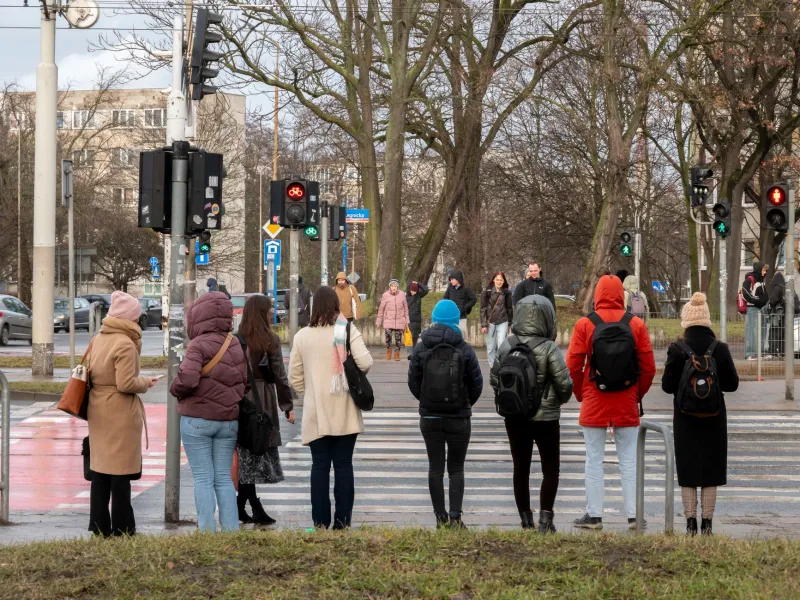
There's a particular kind of silence that fills a car when the light turns green and nothing happens. The learner is looking at the light. The instructor is looking at the learner. Somewhere behind, a van driver exhales in a way that is somehow audible through two layers of glass. It's one of the most common wobbles I see around Gosport, and it almost never means what people think it means.
It isn't usually fear of moving. It's a brief gap between noticing the light and knowing what to do next. The moment arrives, the brain asks "what now?", and the answer takes a second longer than the queue behind would like. So let's close that gap.
Red Is Where the Work Happens
Most learners treat the red light as a rest stop. In truth, it's the preparation window, and everything that happens on green is just the release of a decision you already made.
When you stop at a red, run through the same short sequence every time. It's deliberately boring, which is the point:
- Handbrake or footbrake on, depending on the wait. Long wait, handbrake. Short queue that's still creeping, footbrake is fine.
- First gear, clutch down. Get it done while the light is red rather than fumbling for it as it changes.
- Find the bite point. If you're on a slope — Clayhall has a few gentle ones, and the run up Ann's Hill rewards a bit of patience — set the gas and bring the clutch to the biting point so the car is already holding itself.
- Eyes up, not down. Once your feet are set, stop looking at the pedals. The gearstick is not going to tell you anything new.
By the time the amber appears, your car should be ready to move the instant you decide it's safe. You're not waiting to react to the green. You're waiting to confirm.
The Amber Isn't Your Cue Either
A useful habit: treat amber as a warning that green is coming, not as permission to go. Some learners anticipate the green and roll forward a fraction before it appears, which is a fault in its own right — and at somewhere busy like the Forton Road lights near the fire station, an early creep is exactly the sort of thing that makes an examiner's pen twitch.
Instead, use amber to finish your checks. Mirrors first: interior, then the right-hand door mirror. Then a proper look right, left, and right again, because a cyclist filtering up the inside on Stoke Road is not going to announce themselves. Then, and only then, glance at the light. If it's green and the way is clear, go.
Notice the order there. The light is the last thing you check, not the first. Green tells you the junction is yours to use; it doesn't tell you the junction is empty.
What the Queue Behind You Actually Thinks
Here's a thing worth saying plainly: nobody behind you is timing you with a stopwatch. The horn you're dreading almost never comes, and when it does, it says far more about the person pressing it than about your driving.
The imagined pressure is real, though. It's why learners rush the observation, or jerk the clutch, or stall — and then feel watched, which makes the next light worse. So give yourself a phrase to fall back on: two seconds is not a delay, it's a check. Two seconds of proper looking is well within what any examiner would consider reasonable. What they're watching for is undue hesitation — sitting there while the junction is clearly clear and nothing is happening. That's a different problem, and preparation is the cure for both.
If the car behind is close and impatient, that's their choice. Your job is the space in front of you.
Three Gosport Lights to Practise On
You don't need a special lesson for this. Ordinary trips do the job:
- The Stoke Road crossroads. Busy, lots of pedestrians, and a good place to practise watching the pedestrian signals to predict the change. When the red figure starts flashing, you know your moment is close. Use that as your trigger to complete your checks.
- The Brockhurst Road and Privett Road junction. A steady flow and a decent queue, which makes it ideal for practising the "mirrors, then move" sequence while feeling slightly observed. It's the closest you'll get to a friendly rehearsal for the pressure of a driving test.
- Anglesey Road, near the Bay. Quieter, with a couple of slight gradients, so you can rehearse the biting-point hold without an audience of twenty.
Do each one three or four times in a lesson, narrating your routine out loud. If you can say "mirrors, right, left, right, clear, go" while it happens, you've made it automatic.
On Test Day
Your examiner is not hoping you'll launch like a sprinter. They want to see that you observed, decided, and acted. A calm two-second check followed by a smooth pull away reads as competent driving. A rushed one that surprises a pedestrian reads as the opposite.
So at every set of lights on the day, come back to the same small idea: the green light isn't a starting gun. It's the end of a job you finished while the light was red. Do the preparation, trust the routine, and your feet will follow your eyes without any drama at all.
And if you do freeze once? Breathe, finish the check, and go. One slow light is not a failed test. It's just a Tuesday in Gosport.