Kerbside Clues: A Calm Learner's Guide to Gosport Bus Stops
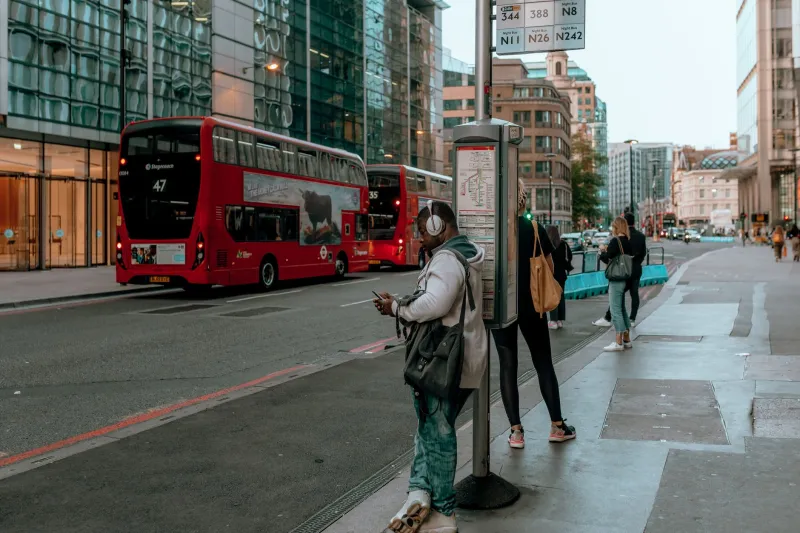
There is a particular kind of pressure that arrives when you see a bus stop ahead in Gosport. Maybe it is the shelter outside the bus station, or a stop on Stoke Road with three people looking at their phones. Maybe a bus is already there, indicator ticking, and the road beside it has shrunk to a narrow channel. Your brain says 'go, go, go' because there is a car behind you. Your hands tighten. That is the moment this article is about.
Passing a waiting bus is not a test of bravery. It is a reading exercise. You are looking for clues: where the passengers are, what the bus driver is doing, how much room is left, and whether the gap is actually a gap. The aim is not to sneak past at the first opportunity. The aim is to make a decision you can explain, at a speed you can control.
See the stop before it becomes a problem
Good bus-stop driving starts well before the shelter. Look far ahead and ask three questions. Is there a bus already at the stop? Are there people waiting, and are they standing close to the kerb? Is the road going to narrow because of parked cars, a build-out or oncoming traffic?
In Gosport, some stops sit on roads where the answer to all three is yes at once. A bus on the nearside, a row of parked cars further along, and a car coming the other way can make the gap feel smaller than it is. Seeing that early gives you time to ease off the accelerator. It also gives the driver behind you time to see your brake lights and adjust.
If you only notice the bus when you are alongside it, you have lost the planning part. You can still deal with it, but everything becomes more rushed. So train your eyes to sweep the kerb as well as the road.
Mirror, signal, manoeuvre — with a kerbside pause
The classic routine still works, but at a bus stop it needs a little more breathing room.
Mirrors first. Check your interior mirror and left wing mirror. You want to know what is behind you and whether anyone is close. If a car is tucked up behind, avoid a late, sharp brake. Ease off early instead. A smooth reduction in speed is easier for everyone to read.
Signal if it helps. If you need to move out around a stationary bus, signal in good time. If you are staying in your lane and simply passing with plenty of room, a signal may not be necessary. The point is to communicate your plan, not to decorate the road with indicators. Ask yourself: will this signal tell someone something useful?
Manoeuvre gently. Reduce speed before you reach the stop. Create as much clearance as you can from the bus and the kerb. Pass wide and slow if the road allows, and keep your eyes moving: nearside kerb, bus front wheel, oncoming traffic, mirror. Be ready to stop if someone steps out or the bus begins to move.
That is the whole routine. It is not dramatic. It is a pause, a look and a smooth pass.
Reading the bus driver's cues
A bus driver is not trying to catch you out. They are trying to leave a stop, often with a timetable to keep. You can learn a lot from small signals.
An indicator ticking on the right-hand side is the obvious one. Front wheels turning slightly towards the road is another. The driver's head checking the mirror, the doors closing, the bus easing forward — all of these suggest the bus wants to join the traffic.
The Highway Code is clear that you should give priority to buses pulling away from stops when it is safe to do so. That does not mean slamming on your brakes from twenty metres away. It means reading the situation early and deciding whether to hold back. If the bus is already signalling and there is space, a gentle lift off the accelerator and a small pause is usually the calmest answer. Do not flash or wave the bus out. Just leave the gap and let the driver make their own decision.
Reading the passengers
Passengers are the unpredictable part. Someone might step towards the kerb to look for their bus, then step back. A child might run ahead. A person with a pushchair might need more room. Someone with headphones on may not hear you at all.
The trick is not to stare at any one person. Instead, widen your view. Look at the whole group. Are they facing the road? Are they queuing away from the kerb? Is anyone looking at the approaching traffic? A person who is looking at you is more likely to wait. A person who is looking down the road for their bus may not be thinking about your car.
Keep your speed low enough that you could stop if someone made a sudden move. That is not being over-cautious. It is matching your speed to the uncertainty in front of you.
When the road narrows beside the stop
This is where many learners feel the fluster. A bus on the left, parked cars on the right, and an oncoming vehicle approaching. The gap looks possible, but only just. What do you do?
First, do not commit just because you have already slowed down. If the gap is too tight, wait. Hold back behind the bus or before the parked cars, whichever gives you the clearer view. Waiting is a decision. It is not a failure. A learner who waits and then passes safely looks far more assured than one who squeezes through and clips a mirror.
If you are moving out around a bus, check your right mirror and blind spot before you change position. Do not follow another car through a gap just because they did. Their car may be narrower, or their driver may have misjudged it. You are responsible for your own clearance.
Phrases that slow the moment down
When your internal voice is saying 'hurry up', give it something calmer to hold on to. These phrases are not magic, but they buy you a second:
- 'I have seen the bus; I am not surprised by the bus.'
- 'Ease, look, decide.'
- 'Pass wide, pass slow, then go.'
- 'I can wait. Waiting is allowed.'
- 'There is no prize for being first past the shelter.'
Say them out loud on a lesson if it helps. A quiet running commentary can stop the panic from making the decision for you.
What examiners are looking for
On a driving test, an examiner is not hoping you will race past every bus stop. They are watching for planning, observation and control. If you slow for a bus, check your mirrors and decide to wait, that is good driving. If you hesitate for no reason and then lurch forward, that is less good. The difference is usually whether your pause has a purpose.
So make your pause deliberate. Look, decide, act. And if you decide to wait, wait with confidence rather than apologising for it.
A small drill for your next lesson
Pick a quiet Gosport stop with a shelter and a clear view. Approach it three times. On the first pass, say what you see out loud. On the second, practise easing off early. On the third, pass only when you can do so wide and slow. Then try a busier stop, perhaps near the bus station or on Stoke Road, with your instructor beside you.
Kerbside confidence is a skill, not a personality trait. The more you practise reading the stop, the less the fluster has to say.