Coaching, Not Correcting: What Gosport Parents Should Actually Say From the Passenger Seat
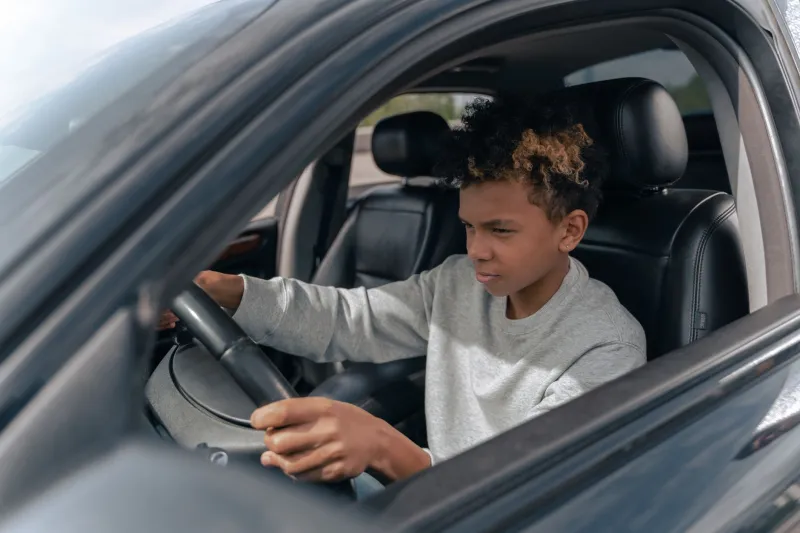
You've been driving for twenty-odd years. You know the roads around Gosport better than your learner ever will. And yet the moment you sit in the passenger seat with a provisional driver at the wheel, all that experience turns into a running commentary that helps precisely nobody.
It's not your fault. Watching someone learn is stressful, and stress makes us talk. But there's a version of this that works much better — and it starts with accepting that you're not the examiner, you're the co-driver.
Your job description just changed
An instructor's job is to build skill. Your job is to provide safe, calm hours in the car so that skill gets used. That's it. You're not there to grade, correct or prepare them for the test. You're there to make practice feel ordinary.
The learners who progress fastest are usually the ones whose parents say very little and mean it kindly.
Phrases that genuinely help
Words matter less than tone, but a few reliable ones are worth stealing.
"What's your plan here?" — asked early, at a junction or before a roundabout, not as a challenge. It hands the thinking back to them at the moment when they still have time to think.
"Take your time. Nothing behind us matters." — the single most useful sentence in learner driving. It defuses the pressure of the queue forming behind you on Forton Road.
"I'll be quiet for this bit." — a promise rather than an instruction. Say it before a busy junction and then actually keep it. The silence tells them you trust them, which is worth more than any tip.
"That was a good decision." — specific praise beats "well done". Naming the thing they did well means they can repeat it.
"Pull over when it's safe and we'll talk it through." — for anything that needs a proper conversation. Never have the big discussion while the car is moving.
Habits worth retiring
The gasp. Every supervising driver does it. Every learner hates it. If you need to react physically, use the dual controls or your own calm voice, not a sharp intake of breath that makes them think they've nearly killed someone.
"Brake, brake, brake." If they need braking that urgently, you should be on the dual controls. Repeating the word at rising volume just produces panic and a stomped pedal.
Narrating what they can see. "There's a cyclist. Cyclist. Cyclist there." They've spotted it. Trust the observation.
"When I took my test..." Lovely story. Save it for dinner.
"You should have..." — anything starting with those three words is a post-match analysis of a moment that's already gone. Ask what they'd do differently instead.
Silent sighing. Believe it or not, learners register this more than the shouting.
Set a pre-drive agreement
Two minutes before the engine starts, agree five things out loud. It feels slightly formal the first time and then becomes second nature.
- You'll stay quiet unless there's actual danger.
- If you need to intervene, you'll say "stopping" calmly, and they'll pull over at the next safe place.
- Directions will be given early — "at the roundabout, second exit" — not at the last second.
- No post-mortems while driving. Anything tricky gets discussed parked up.
- Either of you can end the session early, no questions asked.
That last one matters more than it looks. Knowing there's an exit makes learners far more willing to keep going.
Short Gosport loops for low-stress practice
Between lessons, the aim is hours in the saddle on roads that don't spike the heart rate. Keep sessions to 30–40 minutes and pick one focus each time.
Stokes Bay and Alverstoke lanes. Quiet, wide, plenty of parked cars for gentle meeting practice, and the seafront gives a natural turnaround point. Good for clutch control at low speed.
Bridgemary and Rowner residential streets. Tight junctions, parked cars and 20mph limits — perfect for slow-speed observation without the pressure of traffic behind you.
Lee-on-the-Solent on a weekday morning. Straightforward roads, lots of pedestrian crossings, and an ice cream at the end as a genuine reward rather than a bribe.
The quieter bits of the A32 at off-peak times. Dual carriageway confidence in short bursts, with easy turnarounds.
Any retail park on a Sunday evening. Empty tarmac is underrated for bay parking and reversing practice with zero audience.
Avoid, for now, anything involving the ferry terminal at peak times, school run hours, or the approaches to the bigger roundabouts at rush hour. Those are instructor territory — let them handle the hard stuff and you handle the miles.
When to stop the session
Stop if either of you is getting snappy. Stop if the same mistake happens three times and voices are rising. Stop if they've gone quiet in that particular way that means they're holding back tears of frustration.
A short, pleasant drive that ends on a good note is worth three long ones that end in a row. The goal isn't to fill an hour — it's to make sure they want to get back in the car tomorrow.
Tell the instructor what you noticed
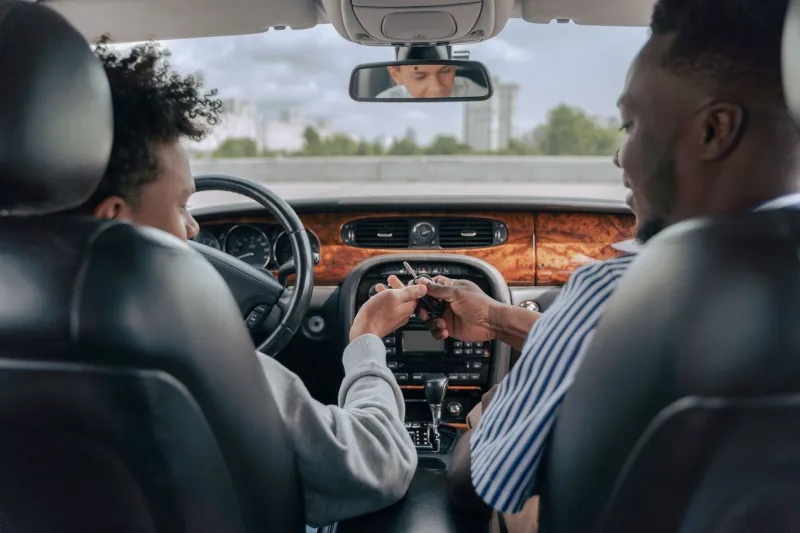
You're an extra pair of eyes, not a second opinion. A quick message — "confident on roundabouts now, still hesitates pulling out of junctions" — is genuinely useful. Critiquing their technique isn't. Let the instructor do their job, and enjoy the fact that yours is mostly just to sit there, stay calm, and hand over the keys.