The Seafront Is a Shared Room: Reading Wind, Walkers and Wobbly Wheels in Gosport
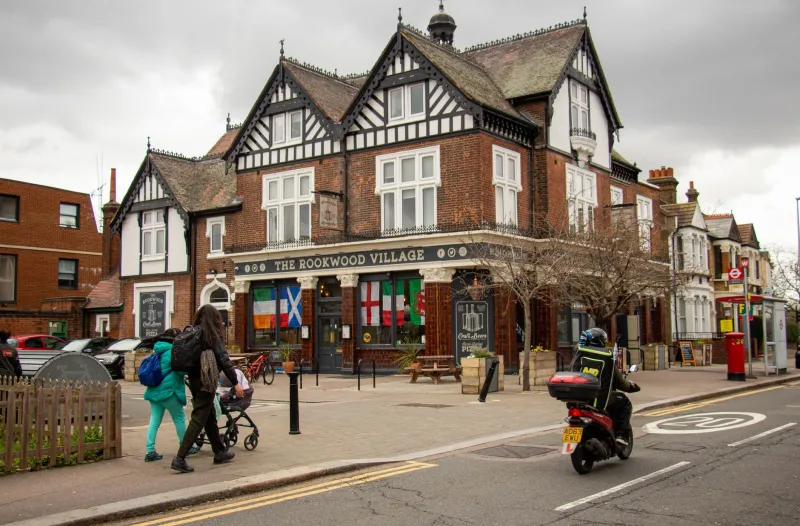
Some roads ask you to be quick. Gosport’s seafront asks you to be awake. Not tense, not gripping the wheel like it owes you money — just awake. The Esplanade is one of those stretches where the road is only part of the story. People drift towards the sea without looking, cyclists thread between parked cars, dogs forget their training, and the wind can give your steering a gentle nudge just as you thought you had everything sorted.
For a learner, that can feel like a lot. But it becomes much more manageable once you stop treating the seafront as a road to get through and start treating it as a shared room. You are not the main character here. Neither is the cyclist. Everyone is just trying to enjoy the same bit of coast without bumping into each other.
Slow early, not suddenly
The biggest favour you can do yourself on the Esplanade is to arrive at the busy bits already slow. Not braking late, not scrubbing off speed at the last second, but easing down early enough that your brain has time to catch up with your eyes.
Think of it like walking into a crowded café. You do not stride in at full speed and then stop dead by the counter. You slow at the door, look around, spot the gaps, then move. The seafront works the same way. If you are approaching a stretch with parked cars, walkers, cycle markings or a cluster of people near an ice cream van, get your speed down before the picture becomes complicated.
That early slowdown does two things. It gives you more time to react, and it makes you less intimidating to everyone outside the car. A learner travelling at a steady, modest pace is far easier to share space with than one who surges forward and then brakes hard because a family has spilled off the pavement.
The sea-air scan
Normal observation is still the foundation: mirrors, ahead, mirrors again. On the seafront, widen it slightly. I ask learners to use a simple three-layer scan.
First, look far ahead. Where does the road bend? Is there a cluster of people near a crossing point? Are cyclists coming the other way? Is someone standing by a parked car with a door that looks ready to open?
Then bring your eyes to the middle distance. Look for movement between parked cars, people stepping off the kerb, dogs on extending leads, cyclists adjusting helmets or wobbling around a drain cover. These are the early clues. You will not always get a warning, but you will often get a hint.
Finally, check the near space. What is directly in front of you? Is there room to pass that cyclist with a sensible gap? Are you drifting towards the centre line because you are staring at the sea? Is the wind pushing you slightly left or right?
It sounds like a lot, but it becomes a rhythm. Far, middle, near. Repeat. The aim is not to stare at every hazard until it becomes a problem. The aim is to keep updating the picture so nothing arrives as a complete surprise.
Cyclists are not obstacles — they are people with a line
When you see a cyclist ahead, resist the urge to treat them as a moving cone. They are a person with a line, and that line may wobble. They might be avoiding a pothole, a drain, a parked car door or a pedestrian who has stepped out. They might be less confident than you are.
Give them room. Wait for a proper gap rather than squeezing past because you are worried about holding up the car behind. A few seconds of patience is worth far more than a close pass that leaves everyone rattled.
Also, remember that a cyclist may need to move out around parked cars. If you see a line of parked vehicles ahead and a cyclist approaching them, expect the cyclist to come slightly towards the centre of the road. Ease off, hold back, and let them make their move. Do not try to race them to the gap.
Wind is a steering input, not a crisis
On an exposed seafront, wind can feel like someone has taken the wheel for a second. A gust catches the side of the car, the steering lightens or pulls, and a new driver’s instinct is often to grip harder and jerk the wheel back.
Try not to fight it. Keep your hands relaxed, make small smooth corrections, and let the car settle. If the wind is strong, reduce your speed a little more and leave extra room around cyclists and pedestrians, who may also be affected by gusts.
It helps to notice where the wind is coming from. If it is pushing you towards parked cars or the kerb, position yourself slightly more towards the centre of your lane — only where it is safe to do so — and keep checking your mirrors. If it is pushing you away from the kerb, be careful not to drift across the centre line.
The main thing is not to panic when you feel the nudge. Wind is not a failure of your driving. It is just weather, and weather asks for gentle adjustments.
Watch for the door-zone shuffle
Parked cars along the seafront create a classic learner hazard: the door-zone shuffle. Someone sits in a parked car, finishes their coffee, checks their mirror for approximately half a second and begins to open the door. Meanwhile, a cyclist is coming past, or a pedestrian is stepping between vehicles.
Your job is to read the clues. Brake lights. A silhouette in the driver’s seat. A door opening slightly. A person standing between two parked cars looking towards the road. None of these guarantee movement, but they are reasons to be ready.
Leave a door’s width where you can, and slow enough that you can stop if someone does something daft. On a busy seafront, that little cushion of space and speed is what keeps a calm drive calm.
Do not wave people across
It is tempting to be helpful. A pedestrian stands at the edge of the road, you slow, and you give a little wave. Lovely. Except you are not the only road user, and your friendly wave can invite someone into a space that is not actually safe.
On the seafront, with cyclists passing and other cars moving, it is usually better to be predictable rather than chivalrous. Slow down, be ready to stop, but let people make their own decision. A wave is not a right of way, and it can create confusion faster than it creates goodwill.
Make it a place you enjoy driving
Once the routine settles in, the Esplanade stops feeling like an exam question and starts feeling like one of the nicer drives in Gosport. You are still checking mirrors. You are still watching for walkers, cyclists and gusts. But you are also learning that calm driving is not slow driving for the sake of it. It is driving with enough space and attention that everyone gets to share the seafront without a drama.
So next time you head along the coast, try the sea-air scan. Slow early, look wide, give people room and let the wind do its thing without wrestling the wheel. The seafront is not a race. It is a shared room with a very good view.