The Queue Is a Tide, Not a Grid: Staying Calm at Gosport Ferry Terminal
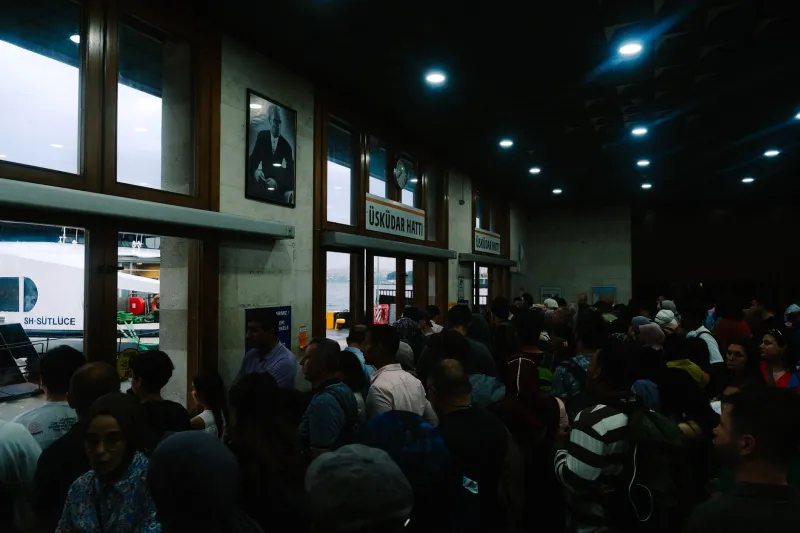
The Gosport Ferry terminal has a way of making learners feel as though everyone is watching. There is the queue of cars, the foot passengers making a dash for the gangway, the bus station nearby, and the general hum of people who know exactly where they are going. It can feel like a grid to be beaten. It is not. It is more like a tide: it arrives, it pauses, it moves on, and the safest thing you can do is read it rather than fight it.
As the evenings draw in this November, the terminal area gets that familiar mix of headlights, reflective jackets and people moving between buses and the ferry. None of that has to be scary. It just needs a routine.
Change the story before you change lanes
Most learners tense up at the ferry because they are telling themselves a story about pressure. 'I must not hold anyone up.' 'I need to get through before the next ferry empties.' 'That driver behind me is judging me.'
Try a different story. You are not trying to win the queue. You are joining it, holding your space, and leaving it safely. That is the whole job. A calm driver at the terminal is not the one who spots the fastest gap. It is the one who slows down early enough to see what is actually happening.
The approach: slow early, decide late
Coming towards the terminal from the South Street and bus station side, the important work happens before you reach the queue. Ease off the speed early. Give yourself room to look. You are checking three things: where the terminal traffic is going, where the foot passengers are coming from, and whether the road ahead is clear enough that you will not be stuck across a junction or blocking a bus station exit.
Do not drift into a queue lane by accident. If you are just passing the terminal rather than catching the ferry, follow the signs for your route and keep your position deliberate. If you are heading into the terminal area, pick your lane early enough to be stable, but late enough that you have seen the markings and the people around you. There is no prize for choosing a lane three seconds before everyone else.
Keep a gap that lets you see the rear tyres of the car in front. In a stop-start queue, that gap is not wasted space. It is your thinking room. If the queue stalls, use the handbrake rather than holding the car on the clutch. Your left leg will thank you, and you will be less likely to creep forward when you meant to stay still.
The hold: queueing without creeping
The ferry queue rewards patience more than aggression. Leave the creeping to the cars that seem to be playing a game of musical bumpers. You want smooth stops, clear observations and a car that looks predictable to the people around it.
Watch for foot passengers emerging between vehicles, cyclists filtering past, and buses pulling out from the nearby stands. Do not assume that because the car in front has moved, the space ahead is yours. Someone may be stepping out, or a driver may be trying to merge from a side road. A small pause costs you nothing.
If someone wants to merge, decide early whether you are letting them in. A brief lift of the accelerator and a clear gap is kinder than a late wave and a sudden brake. At the terminal, indecision is more disruptive than a simple, early choice.
Wait rather than wave
This is the big one. Learners often want to be polite, so they wave pedestrians across or wave another driver out of a junction. It feels friendly. It can also be misleading.
A wave is a social signal, not a safety system. At the ferry terminal, there may be more than one lane of traffic, a bus moving behind you, or a cyclist coming up the inside. If you wave someone across and another vehicle keeps moving, you have not created safety. You have created a guess.
So wait rather than wave. Hold your position, cover the brake if needed, and let the pedestrian or driver make their own decision. Eye contact is useful. A clear stop at a marked crossing is useful. A cheerful hand gesture that says 'off you go' is not. If you cannot see every lane and every approach, do not invite anyone into a gap you cannot guarantee.
The same rule applies when you are the one waiting to emerge. Do not accept a waved invitation from a driver if it would put you across a live lane or block someone else. Wait for a gap you can see for yourself.
The exit: one decision at a time
Leaving the terminal area can feel like the reverse of arriving, only with more people. Take it in stages. First, get your speed down and your observations up. Second, check for passengers stepping away from the terminal and buses moving off. Third, choose your lane and commit without rushing.
If you are turning right out of the area, do not let a kind wave from an oncoming driver pull you into a gap that is not clear. Look past the friendly face to the second lane, the cyclist, the pedestrian. If you are turning left, watch for people crossing the side road and for buses that may be pulling out. A steady creep, a proper look and a clear commit is better than a rushed lunge.
The terminal is not the place for a snap decision. It is the place for one decision at a time.
Quiet times to practise
If the ferry terminal makes you nervous, do not practise it at 8am on a weekday or just as a ferry empties. Mid-morning and early afternoon on quieter weekdays are usually gentler. Sunday mornings can be calmer too, though the ferry timetable still brings little surges of people.
With an instructor, use the area as a routine rather than a challenge. Approach from one direction, pass the terminal, loop back and approach from another. Practise the slow approach, the gap in the queue, the wait-not-wave habit and the exit turn. If you are not actually catching the ferry, do not join the boarding queue just for practice. Use the approach roads, nearby junctions and pedestrian-heavy sections instead.
A good session is not one where you got through quickly. It is one where you finished feeling that you knew what to look at.
A small script for the passenger seat
If you are the parent or friend beside a learner, try swapping 'go on, there's a gap' for 'what can you see?' It is a small change, but it keeps the learner in charge of the decision. At the ferry terminal, that is exactly what you want: a driver who waits, looks and chooses calmly. The queue will move when it moves. You do not have to race it.